

Low ECorHigh EC
Low EC cocopeat is washed, and is chosen where a lower salt level is wanted as supplied. High EC is natural and suits buyers who wash or buffer after arrival.
Read moreIndonesian cocopeat for international buyers
PT Agrorise Cakrawala Indonesia supplies cocopeat and coconut coir products from Indonesia for importers, distributors, commercial growers and private label buyers.
Export destinations
Countries reached through Agrorise export supply.
Export destinations include Australia, Malaysia, Spain, Iran, Singapore, Türkiye, and China. See all markets
Product portfolio
Every specification is confirmed during quotation. We publish formats and materials, not numbers we cannot stand behind.
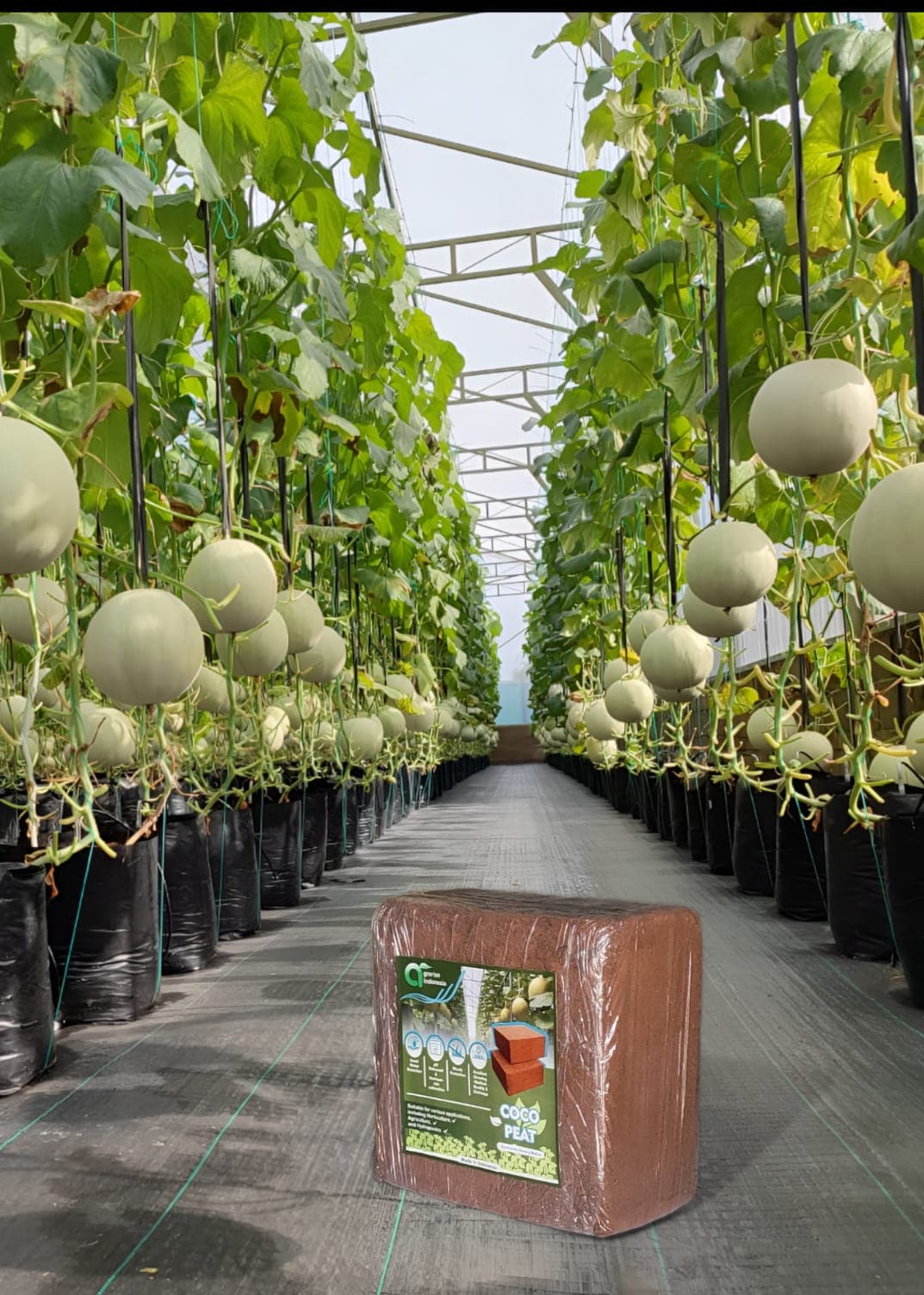
A washed and compressed cocopeat block in the 5 kg format, prepared for growers and distributors who want a low salt growing medium as a consistent base for propagation, container growing and substrate blending..
View product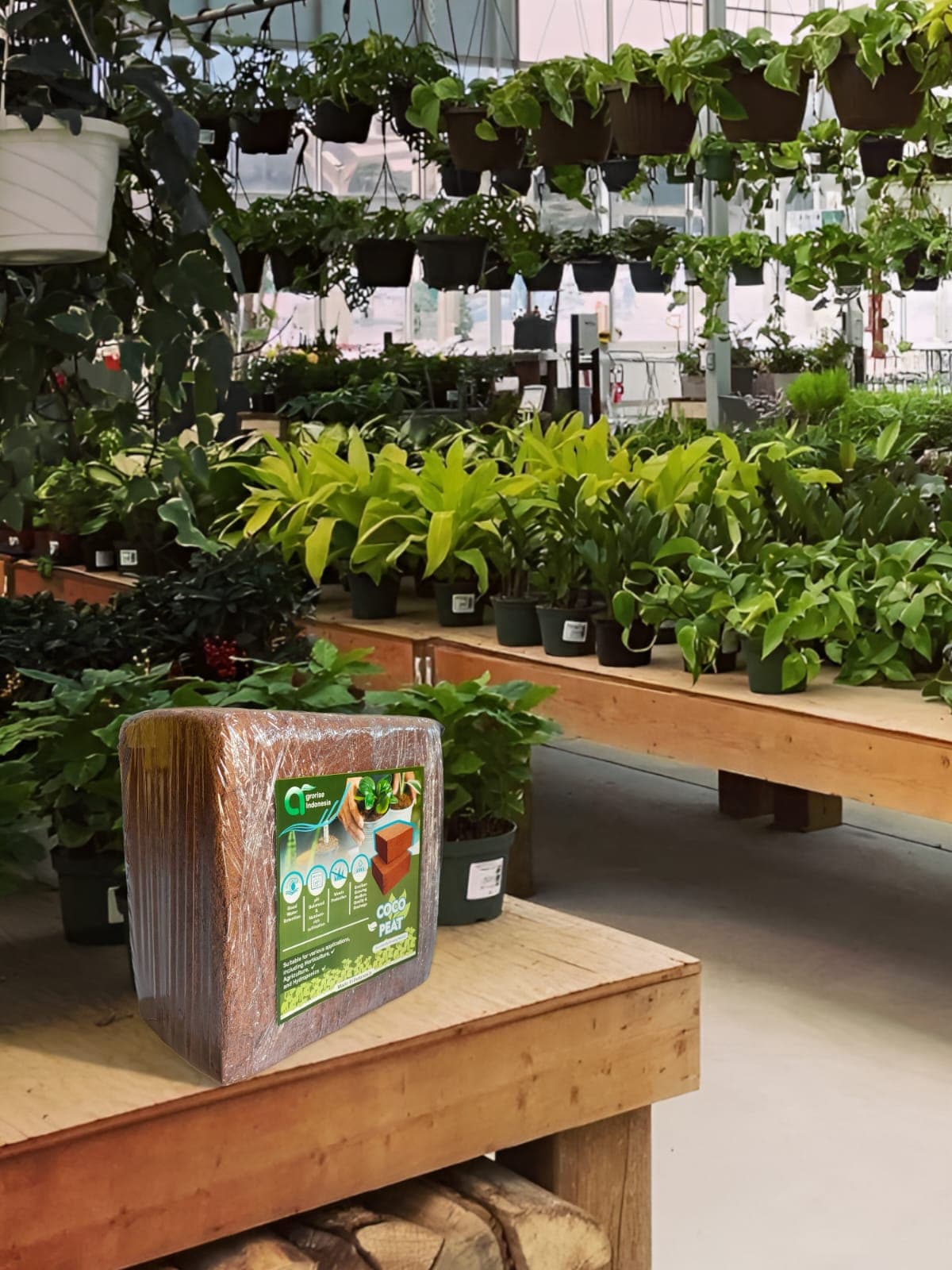
A natural, unwashed cocopeat block in the 5 kg format.
View product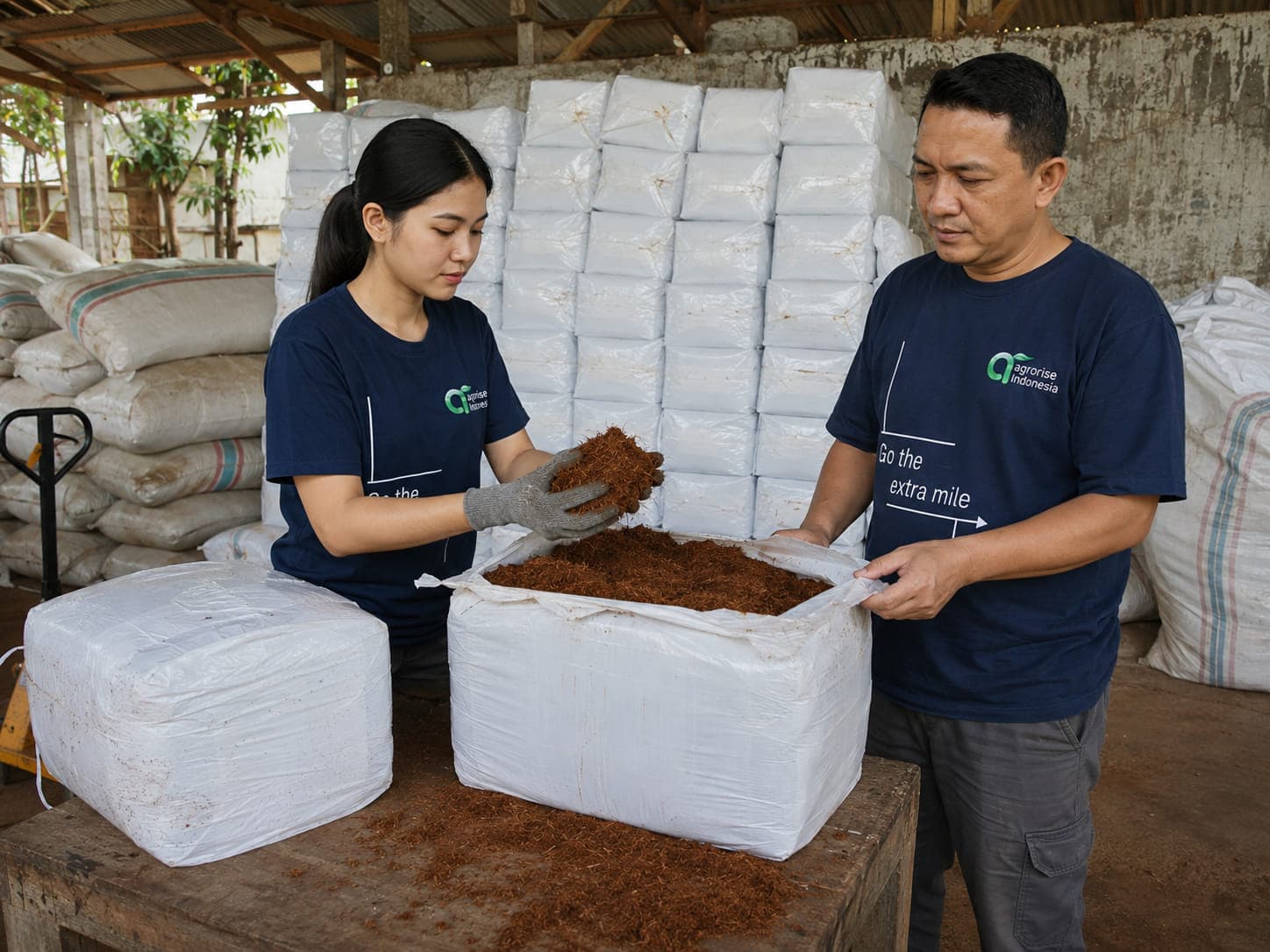
Washed cocopeat supplied loose in woven bags, for buyers who would rather receive a ready to use growing medium than break down and hydrate compressed blocks.
View product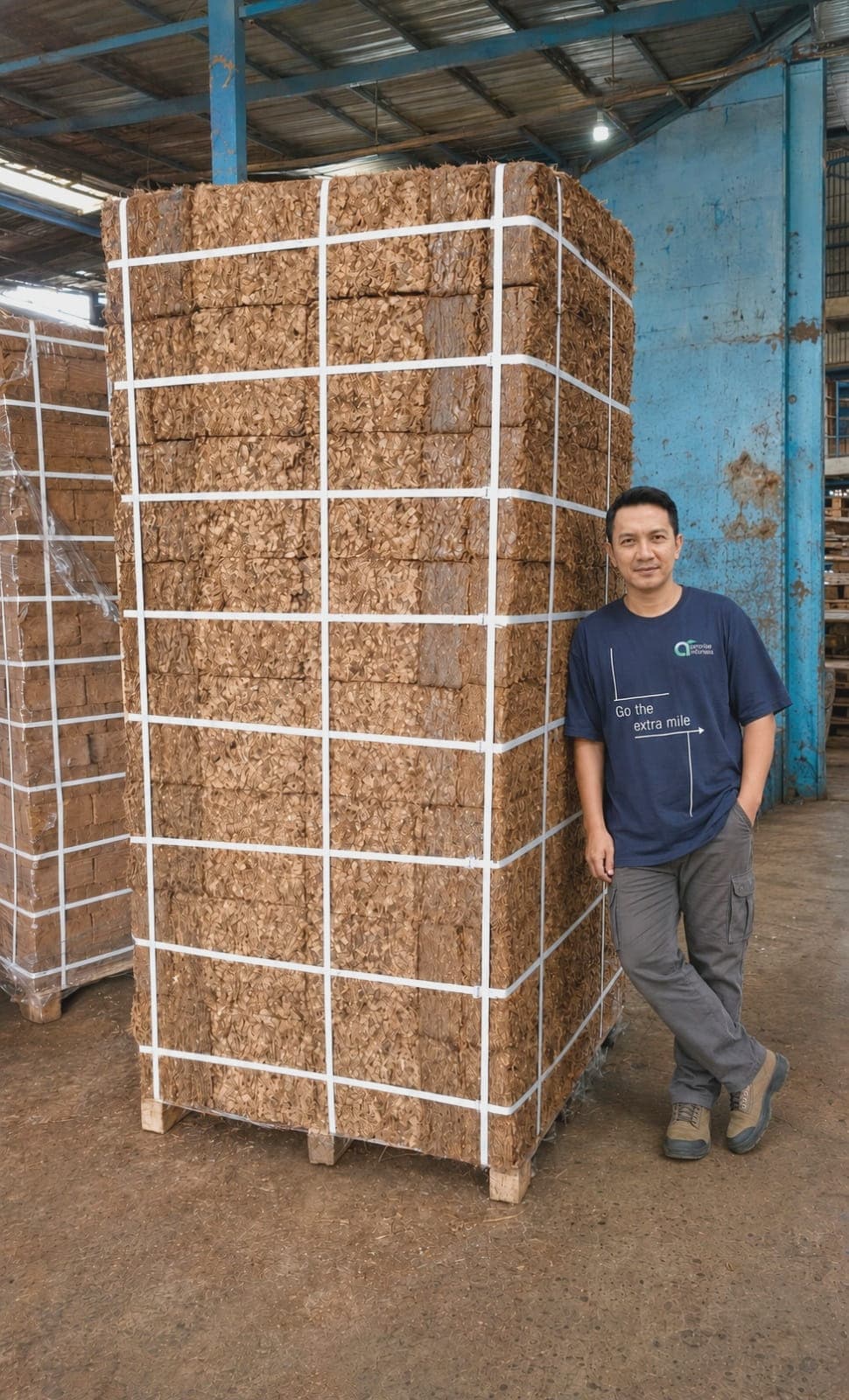
Cut coconut husk supplied as chips, used where growers want more air in the root zone than cocopeat alone provides.
View product
A plant support pole wrapped in coir fibre, used by nurseries, garden retailers and ornamental plant growers to support climbing species such as monstera, philodendron and pothos..
View product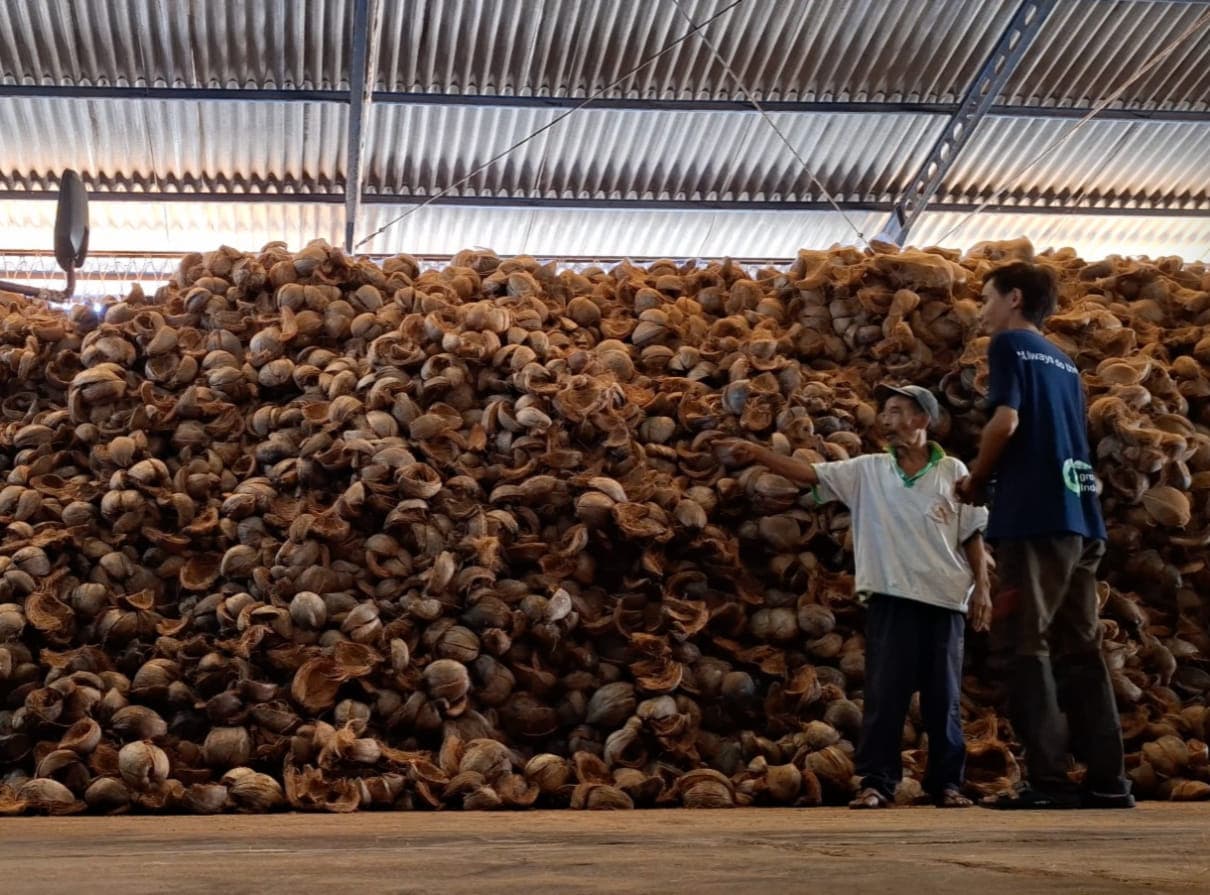
Not every buyer wants a standard format.
View productFind your starting point
The right format depends on what you do with it. Pick the closest description and we will take you to the relevant guidance.
How supply is prepared
A high level view of how an order moves from enquiry to export preparation.
We start from what you actually need: material, format, packaging, destination and volume.
Low EC or high EC, block or bag, cocopeat or chips. The choice follows the application.
Product preparation is coordinated against the requirement agreed in the quotation.
Packing, labelling and any private label artwork are confirmed before production.
The loading configuration is planned around the destination and your handling method.
The document set is arranged around the destination and current authority requirements.

Applications
Choosing between formats
Low EC cocopeat is washed, and is chosen where a lower salt level is wanted as supplied. High EC is natural and suits buyers who wash or buffer after arrival.
Read moreBlocks are compressed and hydrated on site, which uses container space efficiently. Bags arrive loose, which reduces handling at the start of a planting cycle.
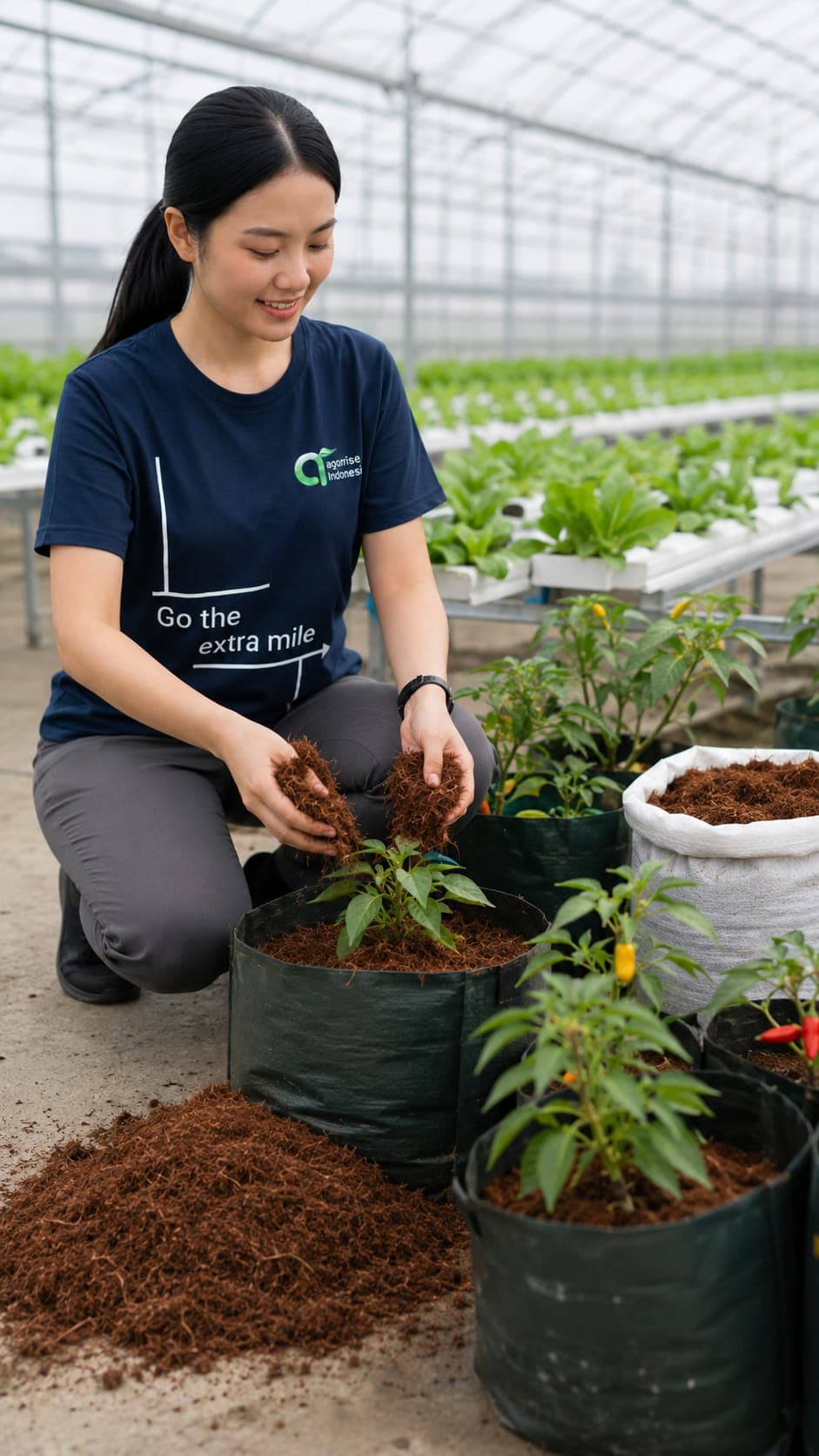
Read moreCocopeat holds water well and forms the base of most mixes. Coco chips open the mix up and add air around the roots.
Read moreStandard formats move faster and cost less to prepare. Custom formats are reviewed for feasibility against your specification.
Read moreGrowing media supports the root zone. Coir moss poles are a separate line that supports climbing plants above it.
Read moreGallery
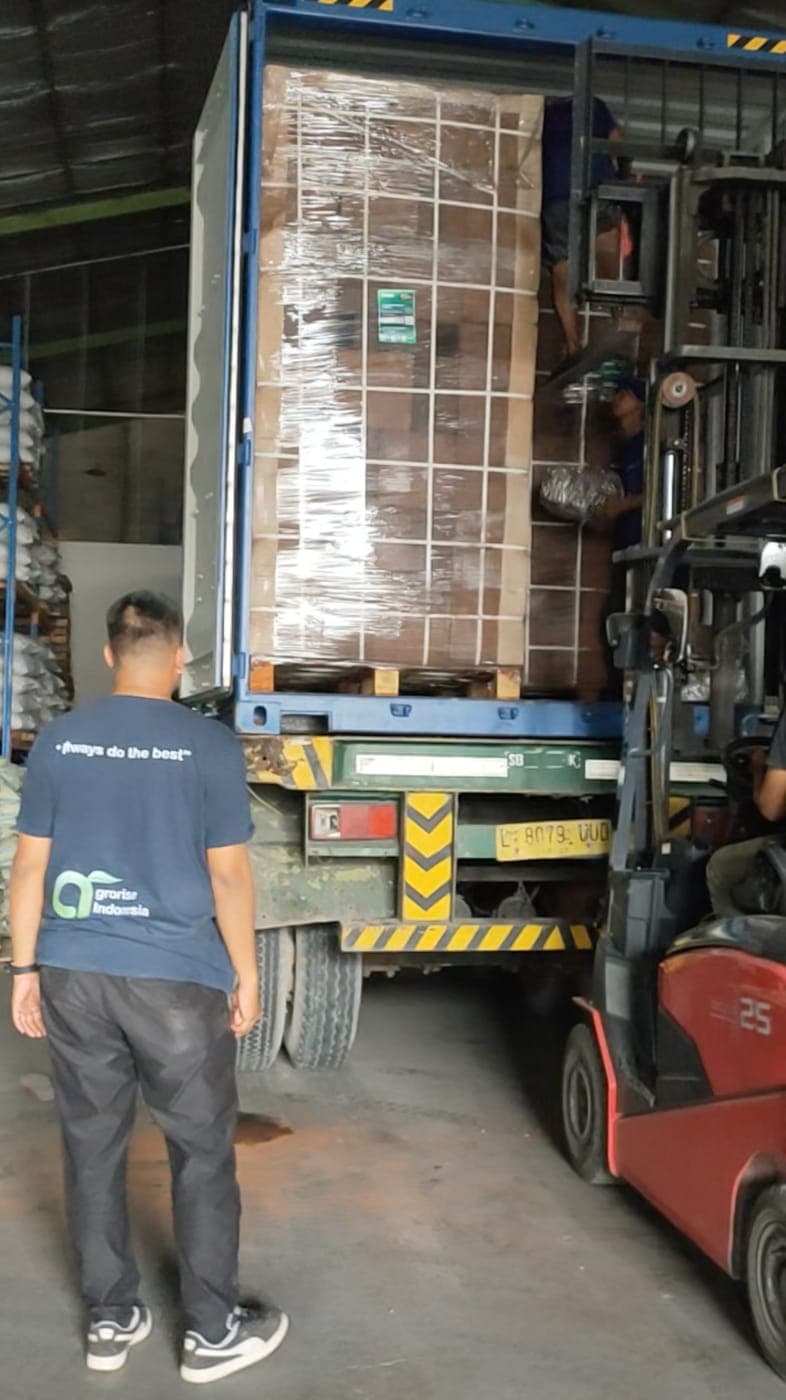
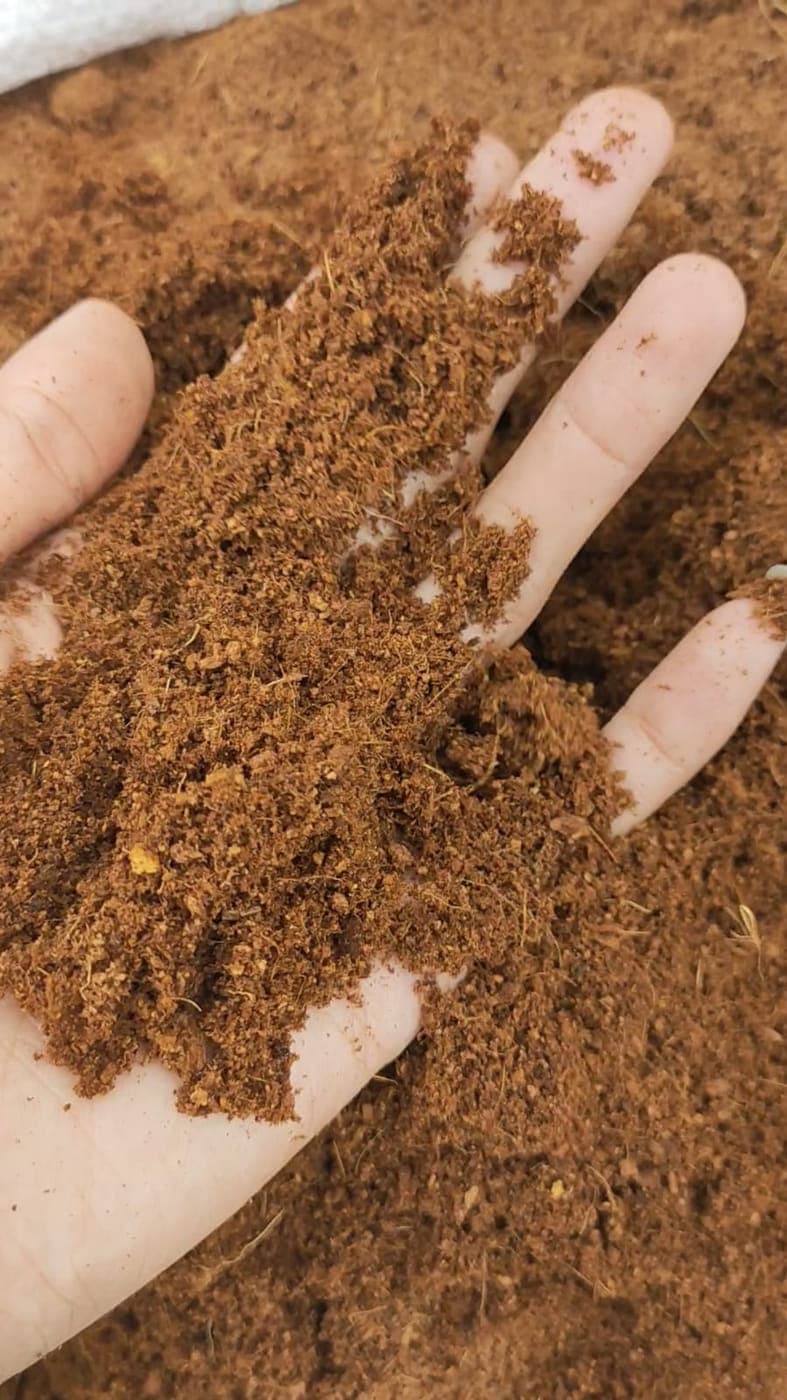
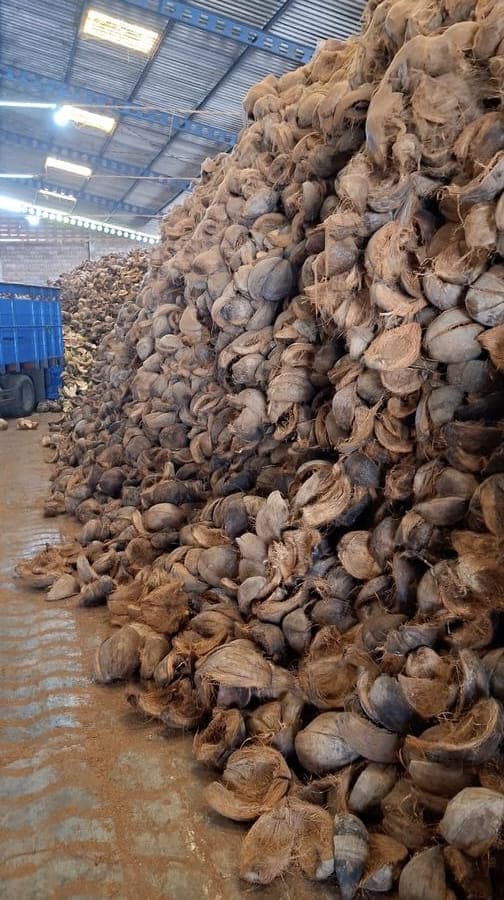
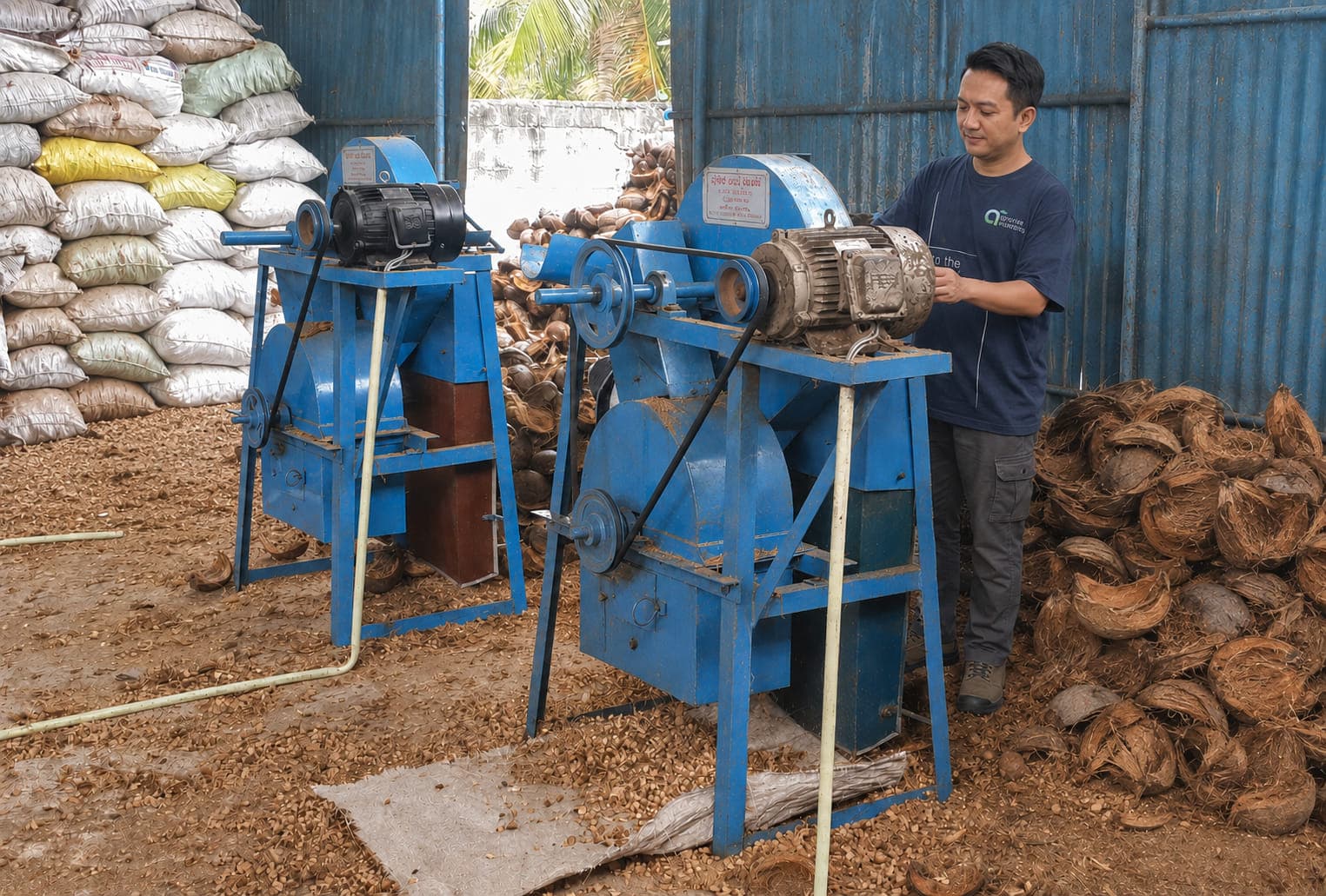
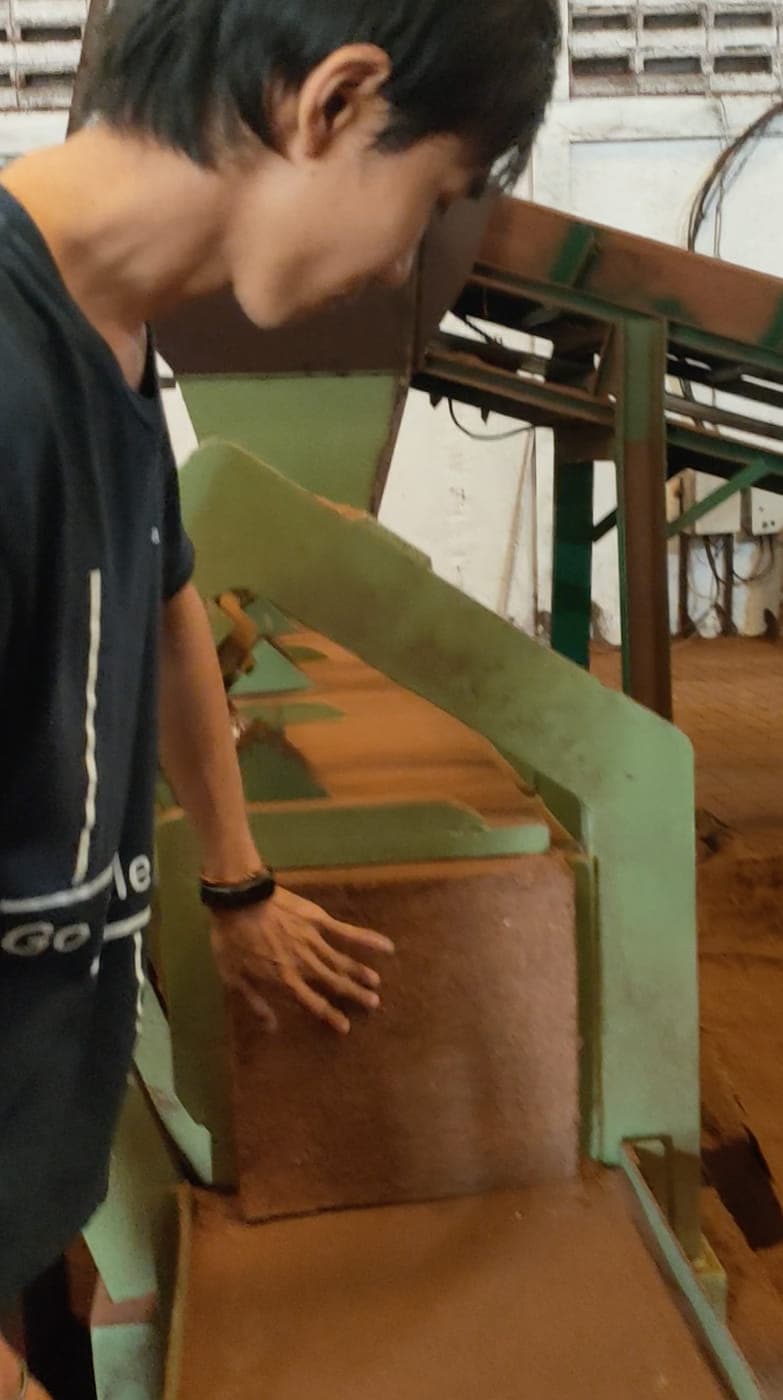
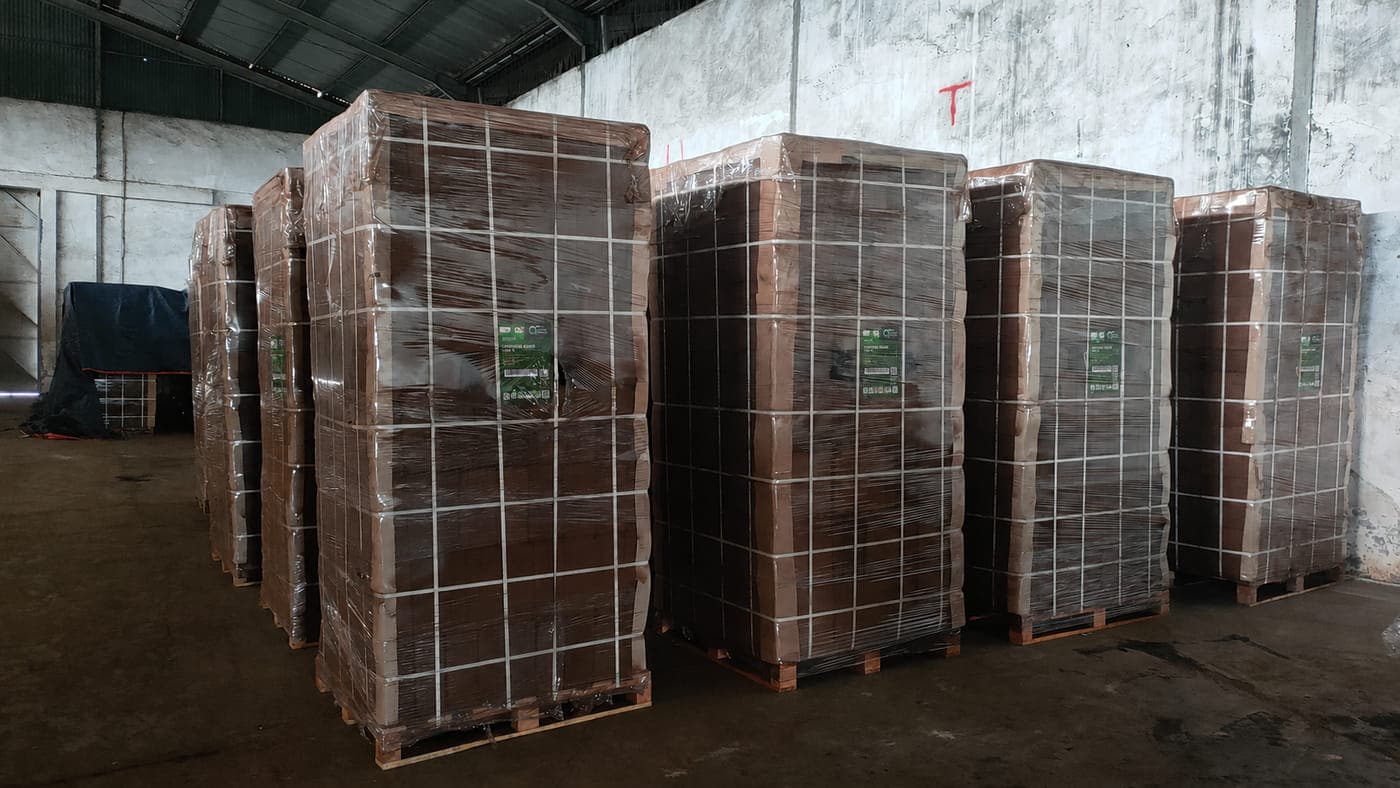
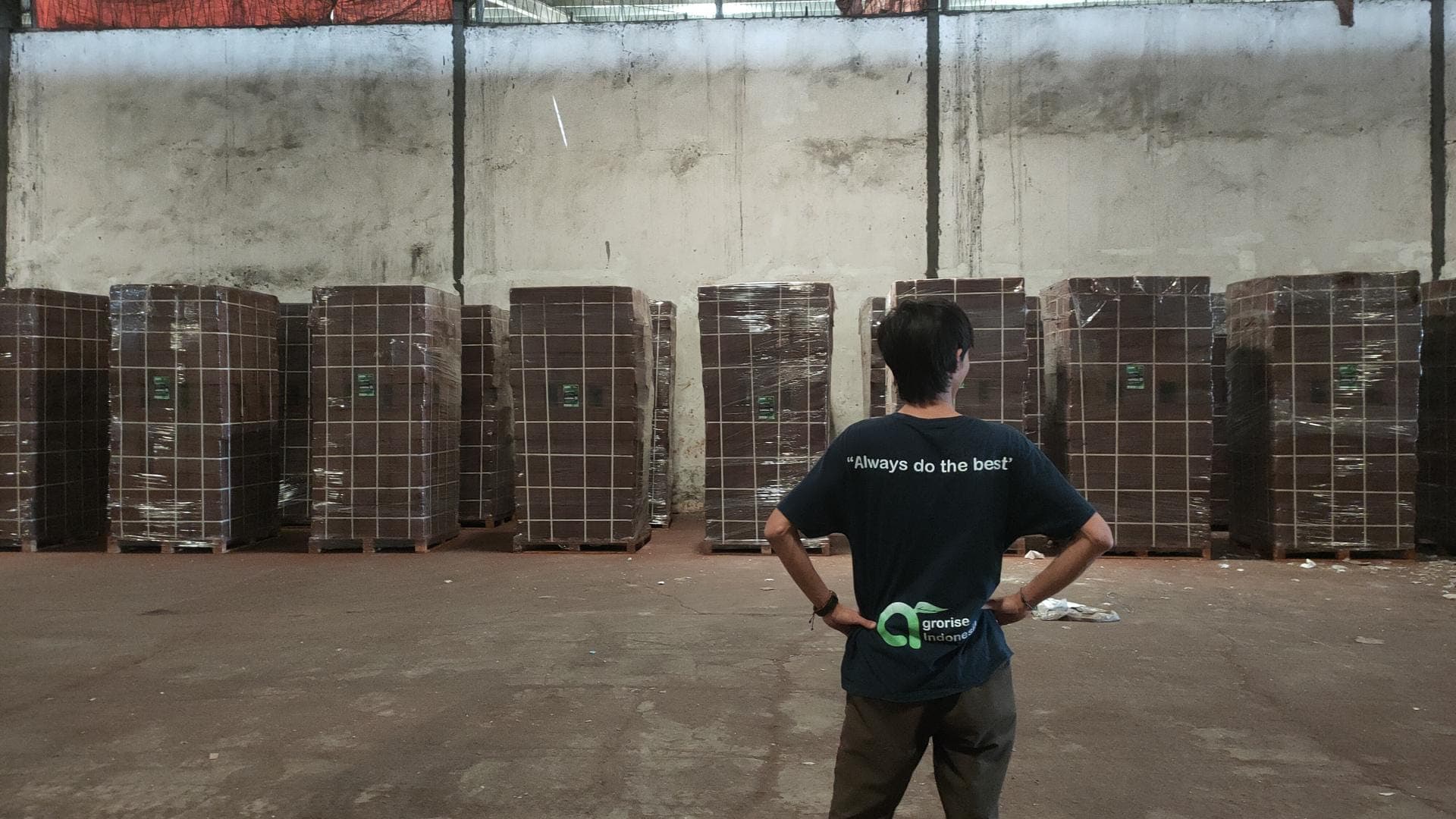
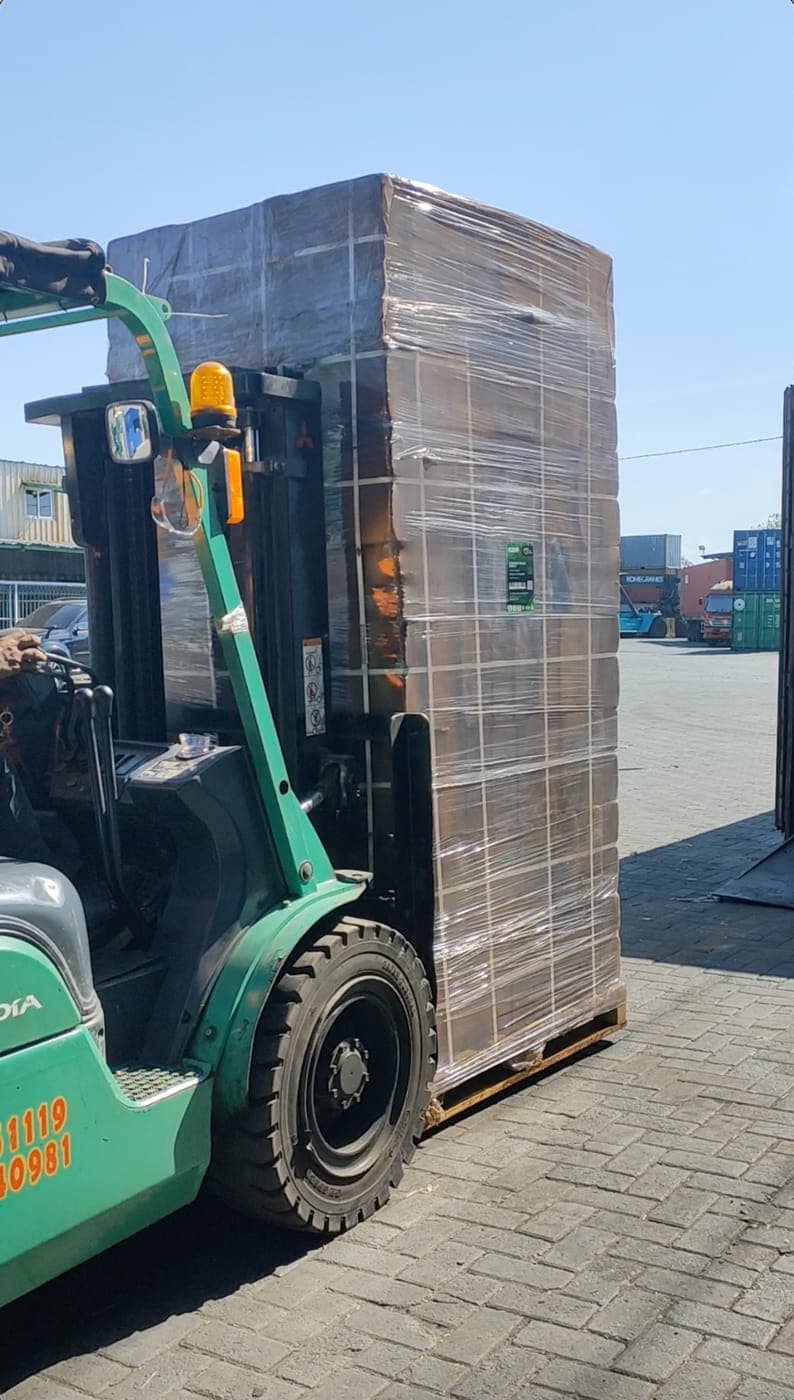
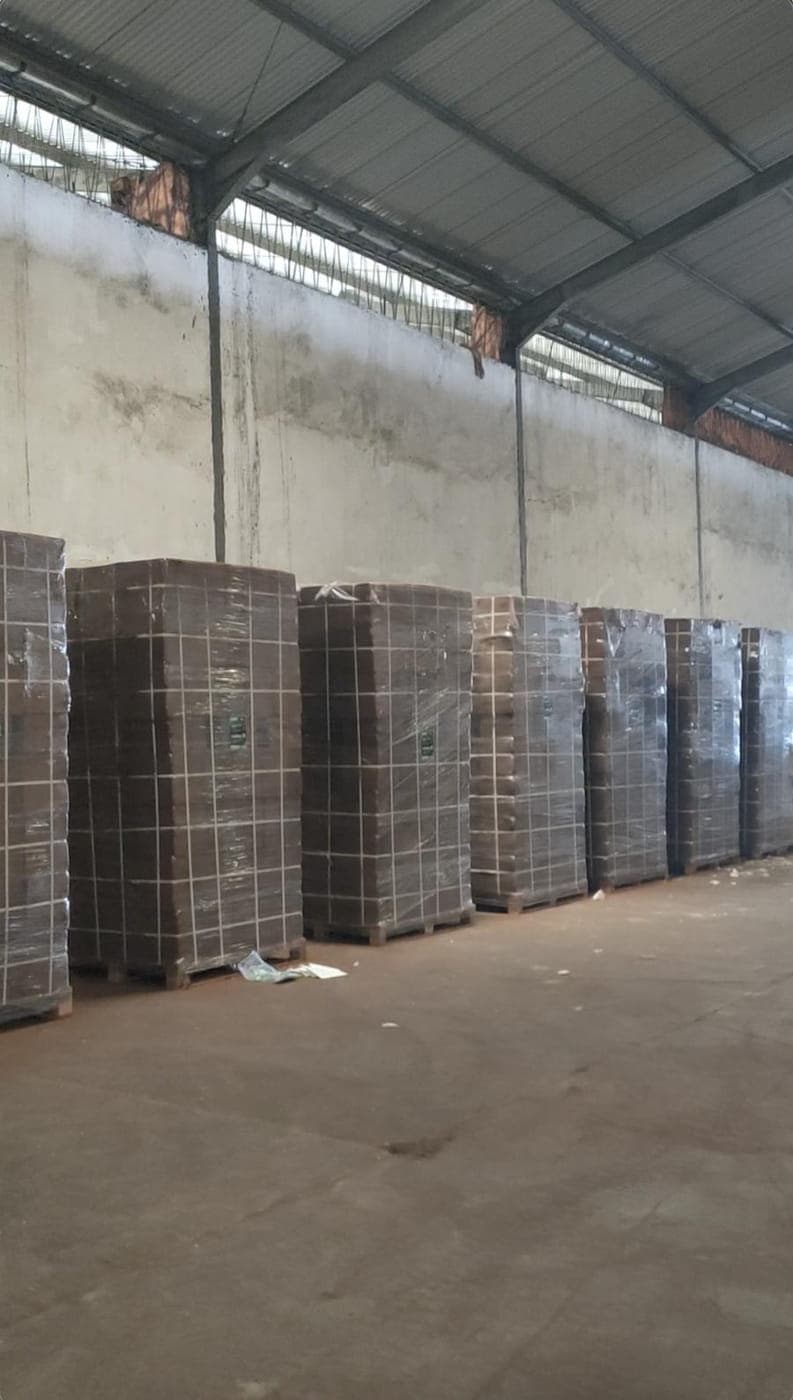
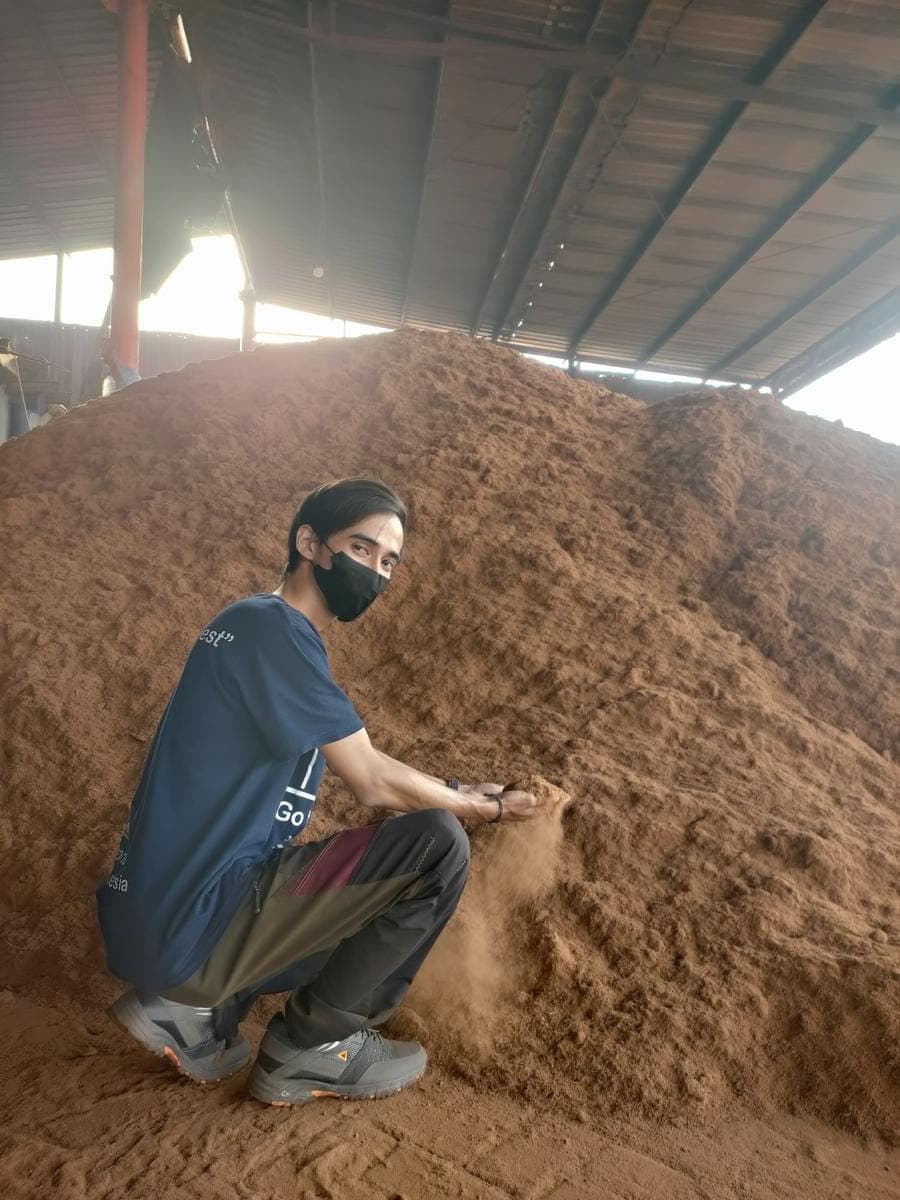
Raw material, preparation, warehouse stock, container loading and growing systems, photographed at the sites Agrorise works with in Indonesia.
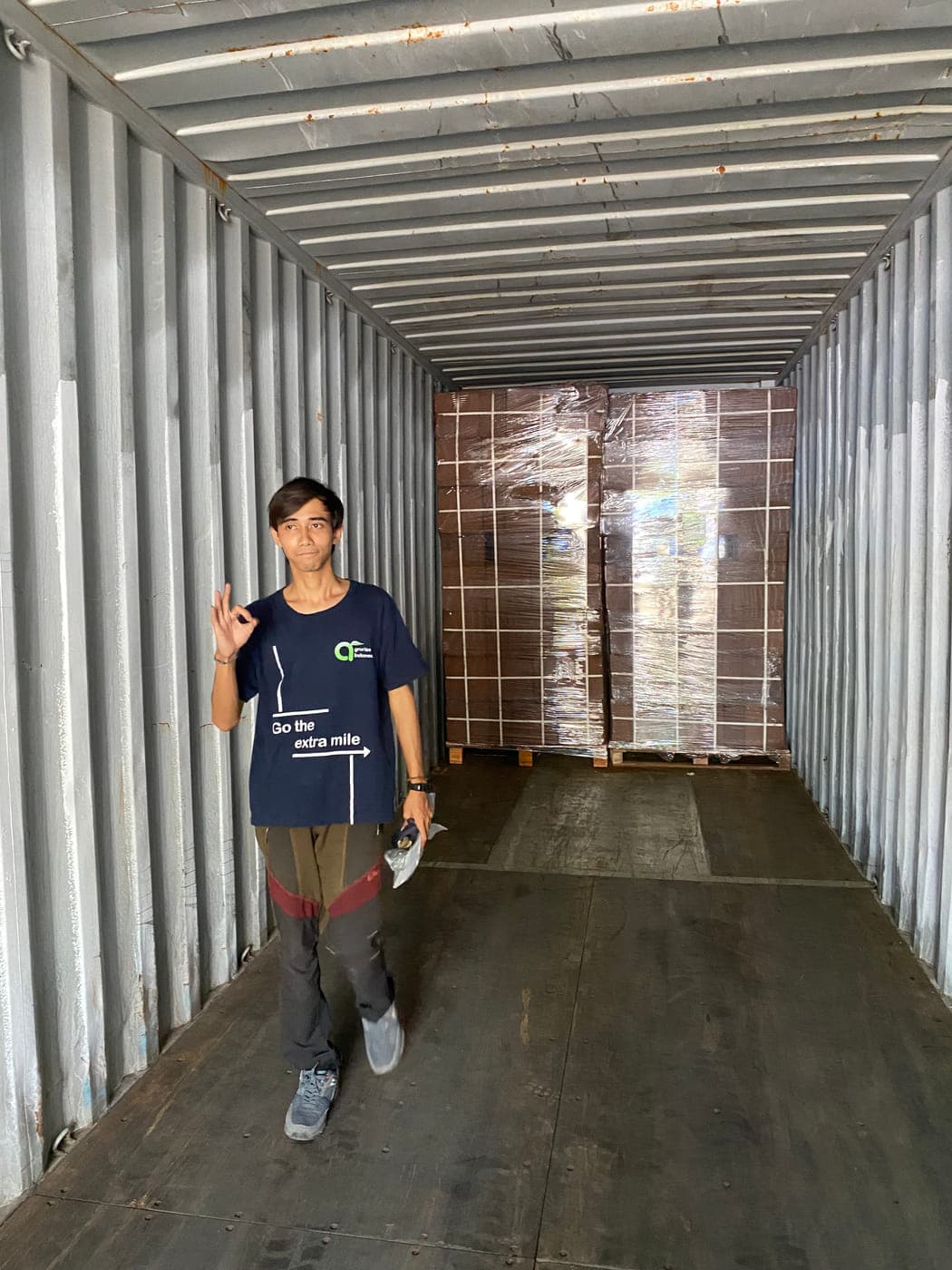
Container planning
This is the question we are asked most often, and the honest answer is that it depends. We do not publish a fixed figure, because the real number moves with several variables.
Request the current loading configuration. We will confirm the figure that applies to your order rather than quote a number that may not hold.
Request the loading configuration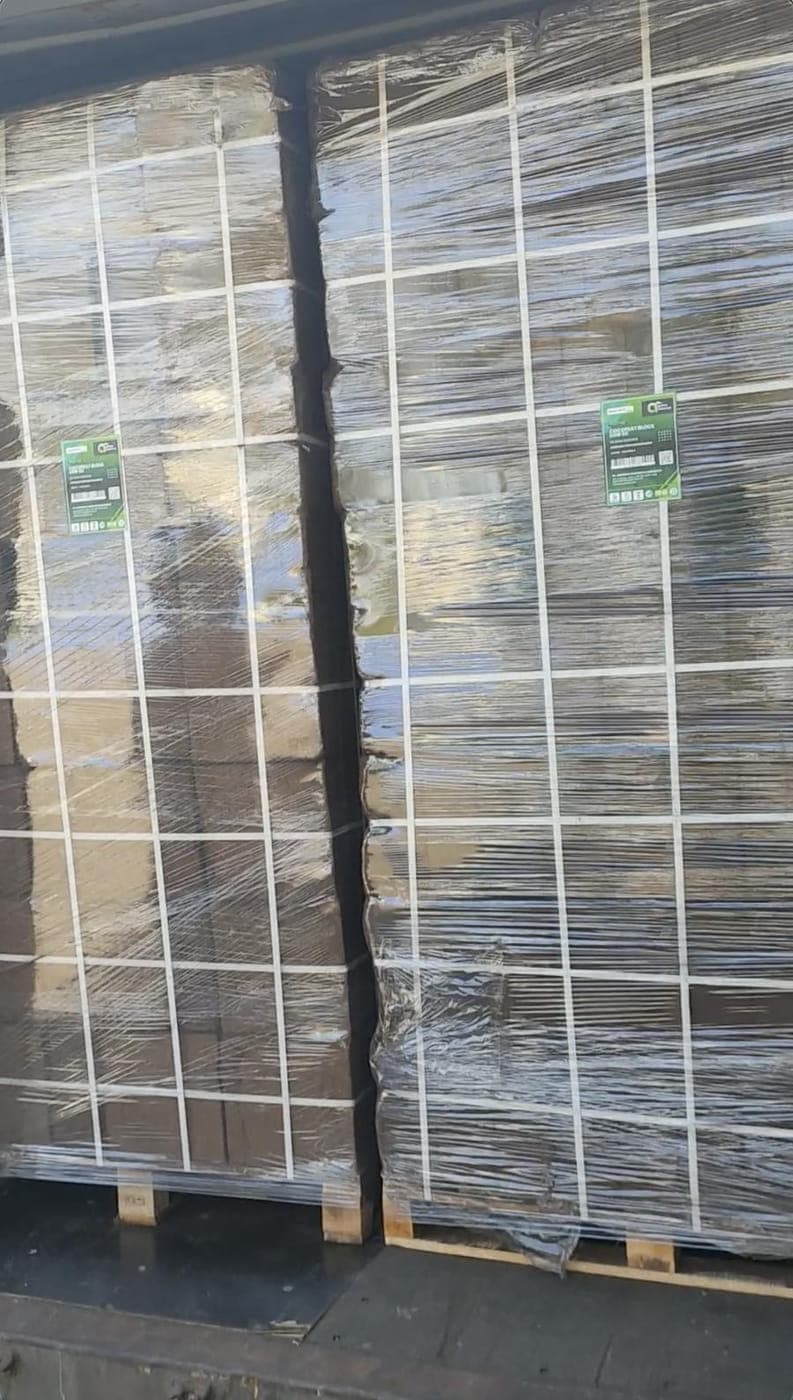
So you do not miss anything we share about growing media. We post what is actually happening at the yard, from raw material arriving to containers being loaded.
@cocopeat_asiaRequest a quotation
Share the product, format, destination and volume. Specifications, packaging and loading are confirmed against your requirement, not assumed.